




What is the Backyard Ultra? An apparently simple test...
The Backyard Ultra is an ultramarathon that tests both the physical and mental capacity of runners. At first glance, the format is simple: participants must complete a lap of 6.7 km (4.16667 miles) every hour. What seems like a moderate challenge turns into a nightmare as the hours pass, since the race has no fixed duration. It is about continuing to run laps around the circuit until only one runner remains standing. The format is simple, but that is precisely the secret of its success. There are no established goals or specific distances to reach; the race ends only when there is one last runner left. The rest of the participants are classified as DNF (Did Not Finish), regardless of how many laps they have completed.Origin and expansion of the Backyard Ultra.
The first edition of the Backyard Ultra was organized in 2011 by Gary Cantrell, better known as Lazarus Lake, who is also the creator of the infamous Barkley Marathons. The race was held on his property in Bell Buckle, Tennessee, under the name Big Dog's Backyard Ultra, in honor of his dog. Since then, the format has gained followers worldwide, becoming an international phenomenon. Today, editions are held in various countries, and in 2020 the first Backyard Ultra World Championship was organized, where the best runners from each country compete simultaneously in different locations around the world connected by an online platform. Over the years, the Backyard Ultra has gained popularity not only among elite runners but also among those seeking a challenge completely different from the usual.Basic format rules.
The rules are quite clear, but the challenge they propose is monumental:- Lap distance: Each lap measures exactly 6.7 km (4.16667 miles), which means that after 24 hours, runners will have completed 100 miles (approximately 160 km). There is a warning signal that will be given 3, 2, and 1 minute before each start. Additionally, all competitors must be within the corral; there are no late starts.
- Limited time: Runners have exactly one hour to complete each lap. If they succeed, they can rest the remaining time until the start of the next lap.
- No pre-established end: There is no distance or time limit; the race continues until only one runner remains standing. All others are eliminated as soon as they fail to complete a lap within the time. There is no support staff except for designated points, and poles cannot be used.
- The last runner standing: The last runner to complete a lap is the winner, or finisher. If no runner completes the final lap, then there is no winner.
The physical and mental challenge of the Backyard Ultra
The Backyard Ultra tests not only the physical condition but also the mental strength of the participants. Although the distance of 6.7 km per lap seems manageable, the real challenge is the indefinite duration of the race. For many, the hardest part is knowing that the race could last for 24 hours or even several days. - Physical wear: As the hours pass, physical wear accumulates. Runners face common ultramarathon problems, such as blisters, muscle pain, and extreme fatigue. The body deteriorates little by little, and maintaining the pace for so many hours becomes a true challenge. - Mental wear: However, what really distinguishes the Backyard Ultra is the mental exhaustion. Knowing that you have to start a new lap every hour, no matter how tired you are, can be overwhelming. Many runners are not eliminated due to physical problems but due to the inability to stay motivated and mentally strong. The loneliness as the race progresses is another factor that diminishes the motivation of the runners. Among the most commonly used strategies are the use of brief and effective breaks, as well as constant nutrition and hydration. Additionally, some runners use visualization or mental segmentation techniques to face each lap as an independent challenge and avoid thinking about the total accumulated time.World record in Backyard Ultra?
Over the years, runners have set impressive records in the Backyard Ultra format. Elite runners have challenged the limits of what is possible in terms of endurance. Harvey Lewis was the last man standing at the Big Backyard Ultra 2023, completing 108 laps (of 4.166 miles each) and setting a new record in the event with 450 miles completed, which is also a world record, in 108 hours of competition.
6. What range of Teamergy clothing do we recommend for facing a challenge of this magnitude?
For this type of race, we recommend using our FLY range set composed of:
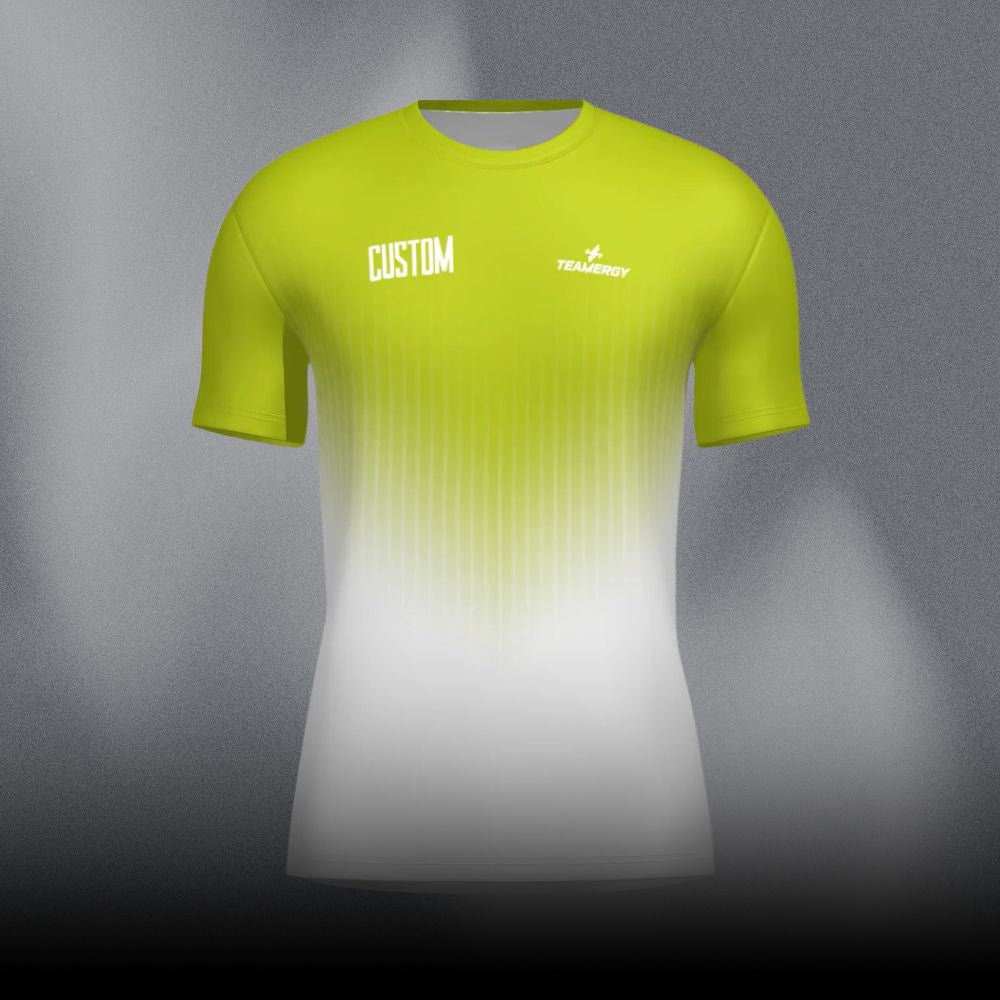
FLY Trail Shirt: will act as a second skin, preventing chafing over the long hours. It is made with bi-elastic fabric (elasticity both vertically and horizontally) for extra comfort that will allow you total freedom of movement. Additionally, its high breathability favors sweat evacuation, and its very quick drying along with the half zipper at the neck creates a pleasant feeling of freshness throughout the race.
FLY Trail Pants: with so many km behind you, you will feel like you are not wearing anything on the lower part. Ultralight pants that stand out for their high comfort, quick drying, and maximum breathability. Optimal in hot conditions and for runners who seek to feel total freedom of movement while running and who value lightness.
In short, the Backyard Ultra is much more than a race. It is a test of endurance, patience, strategy, and mental strength. With each lap, runners face not only the terrain but also their own limits. In a world where distances are predetermined, this unique format invites runners to explore the unknown, pushing their bodies and minds into uncharted territories. If you are an endurance runner looking for a new challenge, the Backyard Ultra could be your next great adventure. Would you dare to face an endless challenge? Check the official pages at the Spanish and global level to explore more.





Leave a comment
This site is protected by hCaptcha and the hCaptcha Privacy Policy and Terms of Service apply.